


In Luke, the empire checks the clock for when—and marks a map for where—we pinpoint the kingdom of God’s incursion:
Now in the fifteenth year of the reign of Tiberius Caesar, when Pontius Pilate was governor of Judea, and Herod was tetrarch of Galilee, and his brother Philip was tetrarch of the region of Ituraea and Trachonitis, and Lysanias was tetrarch of Abilene, in the high priesthood of Annas and Caiaphas, the word of God came to John, the son of Zacharias, in the wilderness.1
There’s so much delicious irony in this long, periodic sentence, and irony is the vernacular of biblical justice. As with all periodic sentences, nothing really happens until the sentence’s subject and verb finally show up: “the word of God came.” God chooses the time. All of the authority and actions of Tiberius Caesar and Caiaphas and the rest are reduced here, syntactically speaking, to subordinate phrases and clauses. The empire and its client rulers add up to nothing but backdrop.
The sentence’s syntax, then, reinforces its semantics: the word of God doesn’t come to this world’s rulers but to John, a man eating locusts and wild honey and clothed with camel’s hair.2 God chooses the space: we hear of Galilee, Itruaea, Trachonitis, and Abilene, but John shows up outside of the Roman Empire’s way of organizing space. God’s word comes to him “in the wilderness.” John is off the grid.
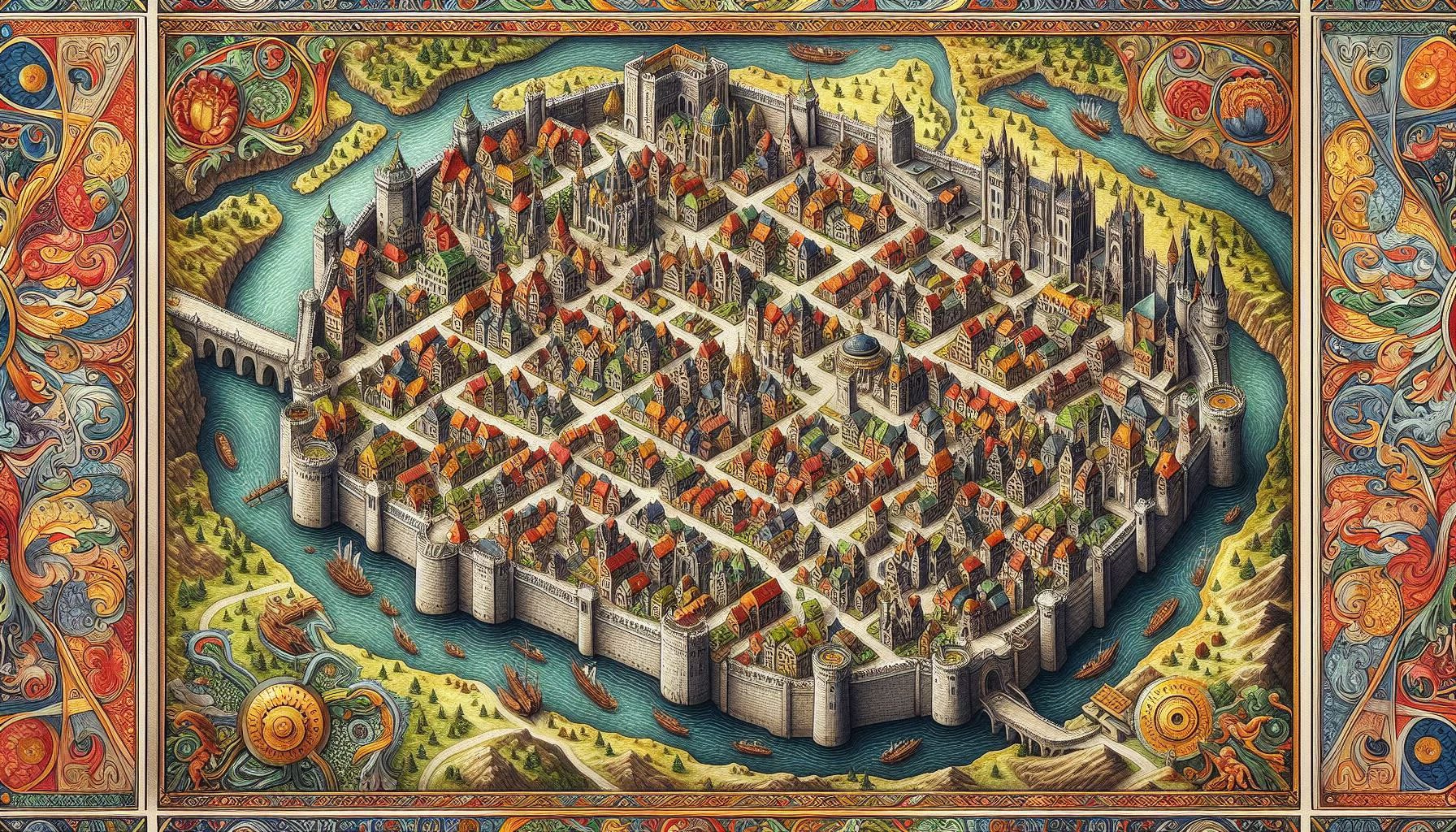
Rulers like grids. Grids are a part of the orderliness and sameness that modern rulers prefer in their domains. Political theorist Benjamin Constant discovered this preference from observing Napoleon:
The conquerors of our days, peoples or princes, want their empire to possess a unified surface over which the superb eye of power can wander without encountering any inequality which hurts or limits its view. The same code of law, the same measures, the same rules, and if we could gradually get there, the same language . . . The great slogan of the day is uniformity.3
To govern cities more efficiently, kingdoms and empires often build or reconstitute cities using lines that intersect at right angles, creating grids. A city’s grid structure is most evident not to a city’s pedestrians but to the principalities and powers that govern the city from above the city’s communities. This bird’s-eye grid pattern presents a tradeoff in favor of the city’s rulers and against its inhabitants, as James C. Scott points out:
Although certain state services may be more easily provided and distant addresses more easily located [through a grid street layout], these apparent advantages may be negated by such perceived disadvantages as the absence of a dense street life, the intrusion of hostile authorities, the loss of spacial irregularities that foster coziness, gathering places for informal recreation, and neighborhood feeling.
Scott concludes that while the grid may work “for municipal and state authorities in administering the city,” the grid’s assistance in administrating a city “is no guarantee that it works for citizens.”4 Communities need “spatial irregularities,” he says, and their citizens need those irregularities’ gathering places.
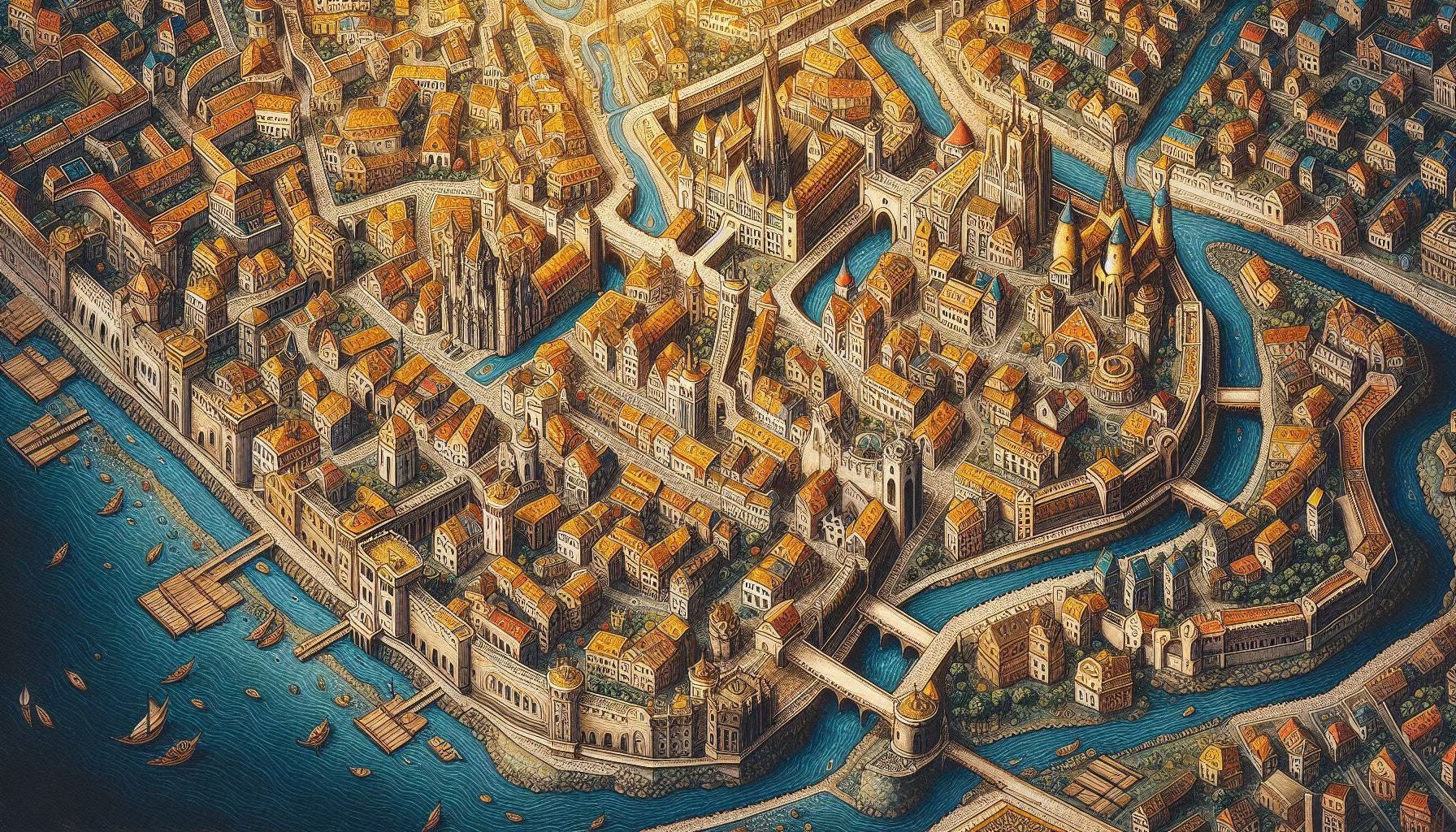
Grids privilege buildings over spaces between buildings. The sameness of a city block’s rectangle sets an architect’s building design off to best advantage. But many city planners, doing what they can with the reticulation of streets they’ve inherited, fight with architects to factor in “figural space” when designing their buildings, their “figural objects.” Here’s how city planner and architect Jeff Speck defines figural space:
[Traditional urbanism] believes that the shape of the spaces between buildings is what matters, because this is the public realm—the place where civic life plays out.5
It’s not as if architects don’t understand figural space. A similar concept, “solid-void theory,” shows up as “Thing #5” in Matthew Frederick’s book 101 Things I Learned in Architecture School:
Solid-void theory . . . holds that the volumetric spaces shaped or implied by the placement of solid objects are as important as, or more important than, the objects themselves.6
Good architects, of course, apply solid-void theory inside their buildings to create interesting spaces. But good, civic-minded architects apply it also, if they can, to their buildings’ exteriors, taking advantage of their buildings’ contexts of streets and other buildings to create interesting spatial irregularities as potential nests for public life.
Grids are also an example of what theologian John Milbank terms “simple space.” Simple space is “suspended between the mass of atomic individuals” below and a centralized government above.7 Simple space helps eliminate horizontal spaces that make for free associations among citizens. Simple spaces do this even when a central government seems tamed by a social construct to which citizens impliedly consent. One can see the effect of a simple-spaces mindset even in the American Revolution’s slogan, “No taxation without representation.” The slogan, purely vertical in its orientation without a hint of free association, is a pre-war surrender of sorts, ceding liberty to a future simple space between atomized individuals and a centralized representative government.
By contrast, Milbank’s concept of “gothic space” is horizontal and complex in nature. Its complexity honors “the irreplacability of individual vantage-points for the making of judgments.”8 Instead of merely mediating between part (individual) and whole (sovereign), the associations that congregate in gothic space tend to become signs that are themselves mediated, fostering a community of interpretation. Using Milbank’s less semiotic phrasing, the associations “become themselves a new sort of context, a never ‘completed’ and complexly ramifying ‘network’, involving ‘confused’, overlapping jurisdictions, which disperses and dissolves political sovereignty.”9
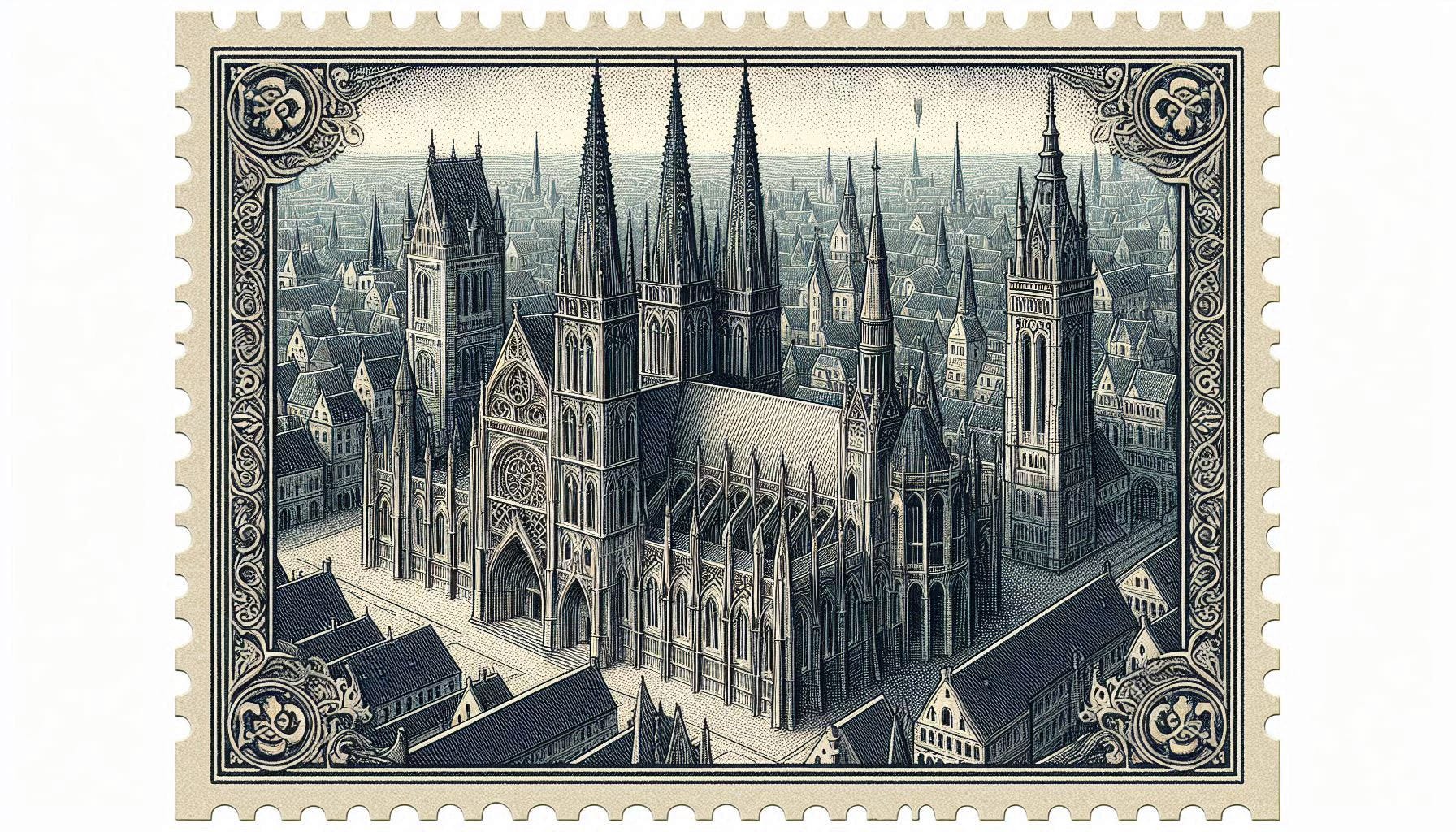
Gothic space, then, threatens the sovereignty that thrives above the grid’s simple space. Gothic space adjusts “to the innovations made by free subjects, without thereby surrendering the quest of harmonic coherence.”10 Gothic space’s coherence isn’t that of brutalizing sovereignty: “. . . not only does the whole exceed the sum of the parts, also the parts escape the totalizing grasp of the whole.”11
Gothic cathedrals mirror these ideals found in the complex relationships of gothic towns and medieval life. The “upwardly aspiring building, representing hierarchy and the sacred,” is at the same time “subordinated to the function of sheltering the many altars, many depictions, many procedures, enacted within its frame.”12 One recalls the psalmist’s description of the unforeseen mixed use in Jerusalem’s temple:
The bird also has found a house, And the swallow a nest for herself, where she may lay her young, Even Your altars, O LORD of hosts, My King and my God.13
The swallow’s usage of the altars’ figural space suggests how, in God’s presence, “parts are in turn wholes.”

But figural space isn’t merely a way to picture these ideals. Architecture can be an invitation to public practice: as Milbank says, “Variegated space has to have literal embodiment.”14
In simple space, citizens have little agency since God’s public presence is reduced to the theoretical source of the government’s authority. Likewise, God’s economic presence is reduced to becoming the mover, if not the creator, of the market’s invisible hand.15 But in gothic space, agency and diversity are privileged over statism and capitalism: “every act of association, every act of economic exchange, involves a mutual judgement about what is right, true and beautiful, about the order we are to have in common.”16 Because this order comes from an “irreducible diversity” (much as the Trinity is, as Walter Brueggemann describes God, “irreducibly, inscrutably relational”),17 and because this order is mediated by the parties to the association and exchange, it “tends to be imbued with a ‘sacred’ character.”18
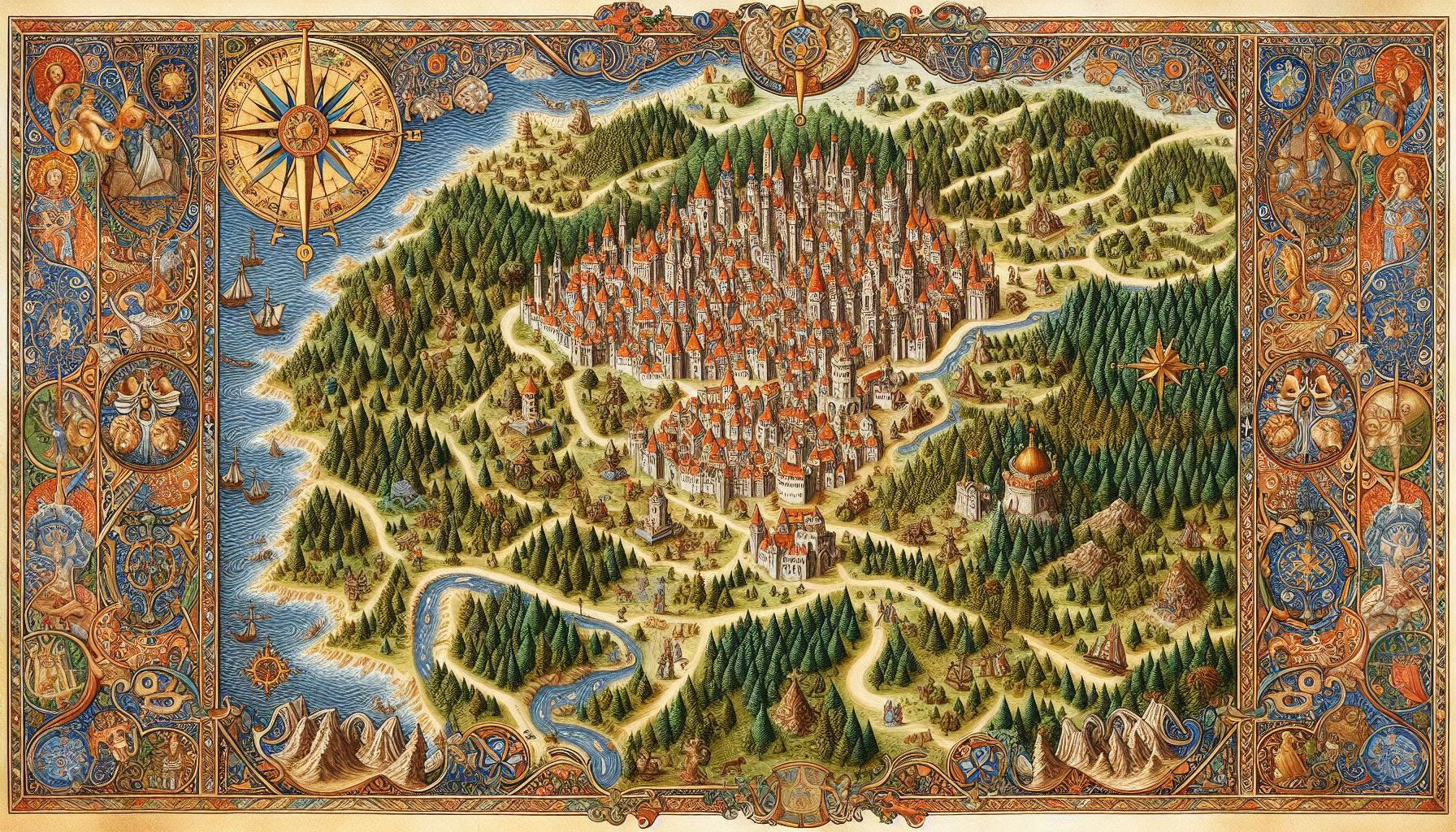
Medieval streets match medieval cathedrals in their “irreducible diversity.” An aerial view of medieval cities would have had “the look of disorder,” according to Scott:
Streets, lanes, and passages intersect at varying angles with a density that resembles the intricate complexity of some organic processes. . . . The cityscape of Bruges in 1500 could be said to privilege local knowledge over outside knowledge, including that of external political authorities. It functioned spatially in much the same way a difficult or unintelligible dialect would function linguistically. . . . Historically, the relative illegibility to outsiders of some urban neighborhoods (or of their rural analogues, such as hills, marshes, and forests) has provided a vital margin of political safety from control by outside cities. . . . Illegibility, then, has been and remains a reliable resource for political autonomy.19
Other “rural analogues” to medieval streets include the paths created by America’s First Nations and many of the animals they lived among, paths that were largely illegible to colonizers.20
John the Baptist’s wilderness, coming at the end of Luke’s long, periodic sentence, provides a biblical “rural analogue” to medieval streets. The wilderness made John’s power illegible to the civil and religious authorities that framed his life and message.
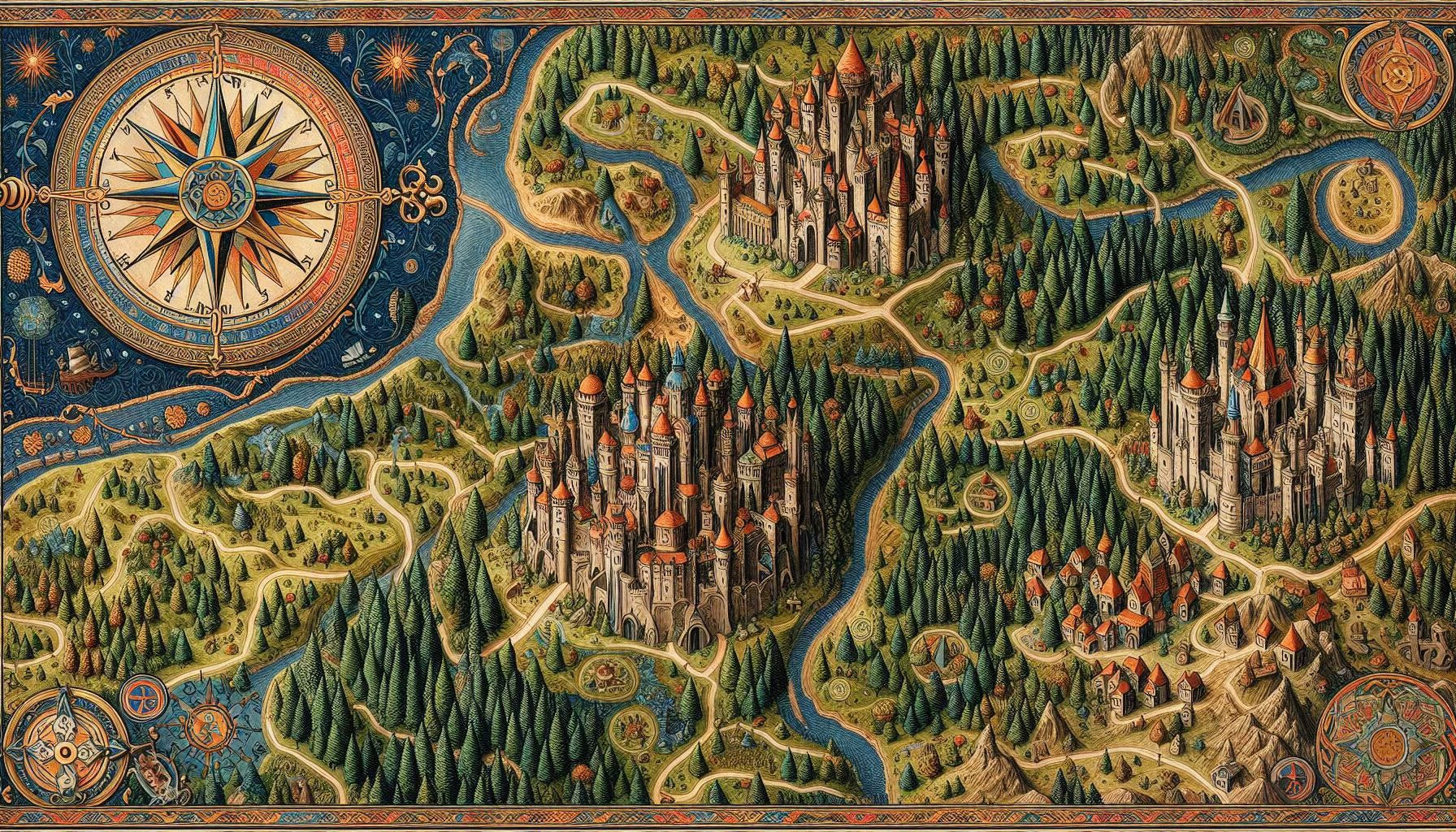
But in the United States, the grid works against spaces like John’s wilderness as much as it works against civic life. Soon after the Revolutionary War, Congress adopted Thomas Jefferson’s plan to divide the American wilderness west of the Ohio River into rectangular lots and townships. The resulting regularity, Jefferson argued, would create “legibility for the taxing authority” (Scott’s words), and it also would create “a convenient and cheap way to package land and market it in homogeneous units.”21 Jefferson’s grid system covered what is now two-thirds of the United States.22
Due in large part to Jefferson’s grid overlay, “a way of thinking about space took shape in America that was primarily concerned not about actual space, but its possible price,” according to Willie Jennings.23 For our new nation and other nations that adopted our approach,24 the grid system organized land the way race organized bodies reoriented from their lands, Jennings points out:
Like the formation of racial vision organized around white bodies, the grid system operated without regard to any specific geographic features. And like the conceptual turnings of whiteness in which tribes and peoples, their stories, their ways of life were charted through the visual logic of their phenotypes and racial classifications, the grid system drew lines through mountains, valleys, rivers, burial sites, and so on.25
Jefferson’s grid system facilitated our domination and reconstitution of what we considered to be wilderness. These imaginative grids chopped through the land’s topographical features and through the indigenous communities that inhabited the land.
A grid, like greed, reduces reality to mere potential. Due to Jefferson’s grid, white Americans settling west of the Ohio bought “space, rather than land,” John B. Jackson points out, and this space “was so easy to buy, so easy to sell, that commitment to a specific plan for the future must have been difficult for many.” Grids of streets in western settlements emptied out sometimes more quickly than they were constructed, Jackson says.26 But that abandonment was according to plan. Jefferson’s grid system, Jackson says, was “never meant to produce close-knit communities.”27
The future is a creature of covenant. Most American settlers moved away from a real future—a future together in covenant—even as they moved west to seek a new economic future as individuals. Luke’s account of John’s advent suggests that any incursion by God’s kingdom to establish community will start against the grid.
Discussion questions
1. What do you think the significance of the wilderness setting was to John and to those he baptized?
2. What changes to government, aesthetics, community, or other factors might have contributed to the move from the aerial-view chaos of medieval cities to the aerial-view orderliness of many modern cities?
3. What came first (if either came at all)—the American settlers’ individualism or their commodification of land? Is one the cause of the other?
4. What examples of simple or complex space do you find in America? What parts of America favor figural objects? What parts of America favor figural space? What is each part’s community life like? In any of these parts of America, is there any correlation between space and community life?
5. “Luke’s account of John’s advent suggests that any incursion by God’s kingdom to establish community will start against the grid.” Discuss.
The short footnotes below refer to the full citations in the earlier manuscript’s and this Substack’s bibliography.
Luke 3:1-2 NNAS.
Matthew 3:4; Mark 1:6.
Benjamin Constant, De l’espirit de conquête (1815), quoted in Scott, Seeing Like a State, 30.
Scott, 58.
Speck, Walkable City, 216.
Frederick, 101 Things, 19.
Milbank, The Word Made Strange, 275.
Milbank, 274-75.
Milbank, 276.
Milbank, 277.
Milbank, 276.
Milbank, 278.
Psalm 84:3 NNAS.
Milbank, 278.
Milbank, 279.
Milbank, 279.
Brueggemann, God, Neighbor, Empire, 9.
Milbank, 279-80.
Scott, 53-54.
Essayist Wendell Berry, in the context of First Nations’ respect for landscape, compares paths and roads: “A path is little more than a habit that comes with knowledge of a place. It is a sort of ritual of familiarity. . . . A road, on the other hand, even the most primitive road, embodies a resistance against the landscape. Its reason is not simply the necessity for movement, but haste.” Berry, “Native Hill,” 14.
Scott, 49-51.
Jackson, A Sense of Place, 153.
Jennings, Christian Imagination, 226.
E.g., Australia and New Zealand’s Torrens system developed in the 1860s. Scott, 51.
Jennings, 226-27.
Jackson, 154-55.
Jackson, 4.
Whoa! Not a quick read, though well said. -- Luke’s periodic sentence reduces Rome to mere backdrop. The word of God bypasses the grid, seeking the "illegible" wilderness instead. Jefferson’s lines commodified land, but community requires "gothic space"—the irregular, figural gaps where the sacred settles. To design for freedom, planners must build nests, not just blocks. -- Thanks again, Bryce.
Excellent. An awful lot here but much of it speaks my language! Brueggemann and Jennings alone. Pierre Lenfant’s choices in designing the district of Columbia’s original Street layout would be an interesting counterpoint. You might also be interested in this gathering.— happening this week!— hosted by CNU.
https://www.faithproperty.org/faith-place-gathering